Margin level and free margin explained
Know the difference between balance, equity, used margin, free margin, and margin level before drawdown forces the lesson.
The working idea
Balance is the account value after closed trades. Equity is balance plus or minus the floating result of open positions.
This difference matters because margin pressure responds to current equity. A healthy balance can still sit beside weak equity during a large floating loss.
How the numbers connect
Used margin is the amount reserved to keep positions open. Free margin is the remaining buffer available to absorb volatility or support new positions.
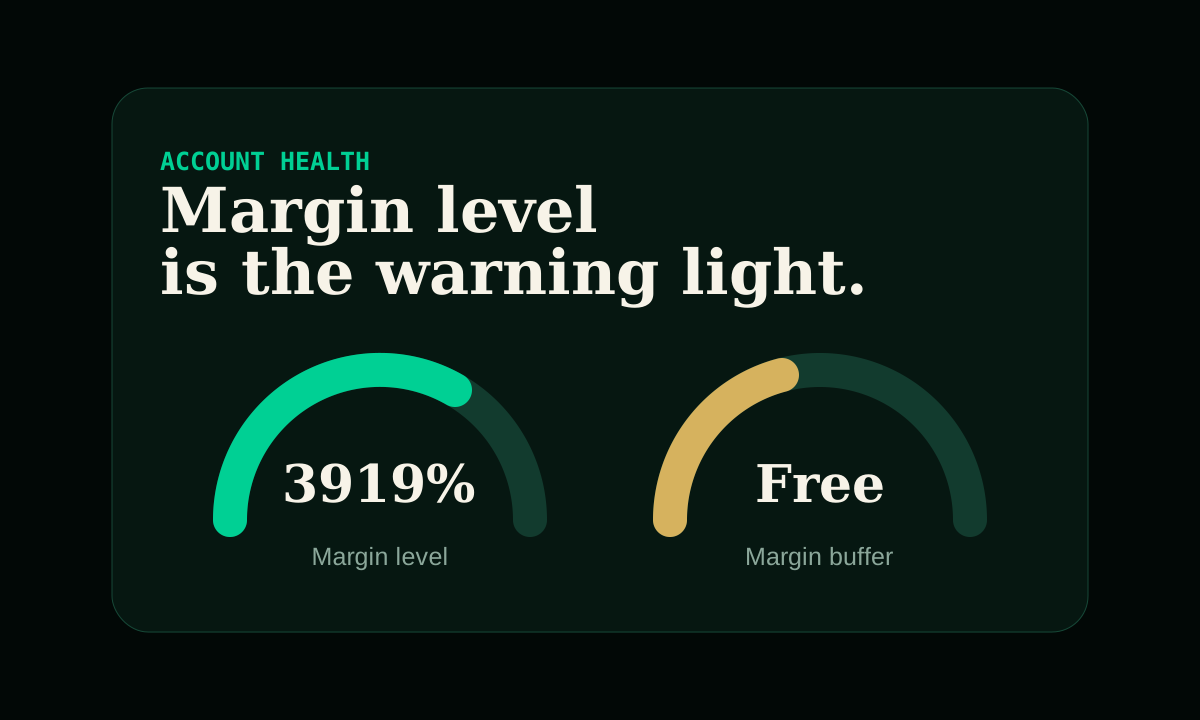
Margin level is commonly calculated as equity divided by used margin, expressed as a percentage. As equity falls or used margin rises, the margin level weakens.
Common mistake
Traders sometimes open several positions that appear separate but are highly correlated. If those trades move against the account together, free margin can disappear faster than expected.
The platform may show enough margin for each individual trade, while the portfolio as a whole is carrying concentrated risk.
Bullion workflow
Check margin level before adding exposure, especially when trades share the same driver such as USD strength, gold volatility, or equity index risk.
If free margin is falling because of open losses, reduce exposure early. Waiting for forced stop-out rules is not a risk strategy.
Risk note
This article is educational and does not constitute investment advice. Trading foreign exchange, CFDs, metals, indices, and crypto derivatives involves significant risk and may not be suitable for all investors.