Position sizing before leverage
Build every trade from accepted cash risk, stop distance, and lot size before deciding whether the leverage setting is appropriate.
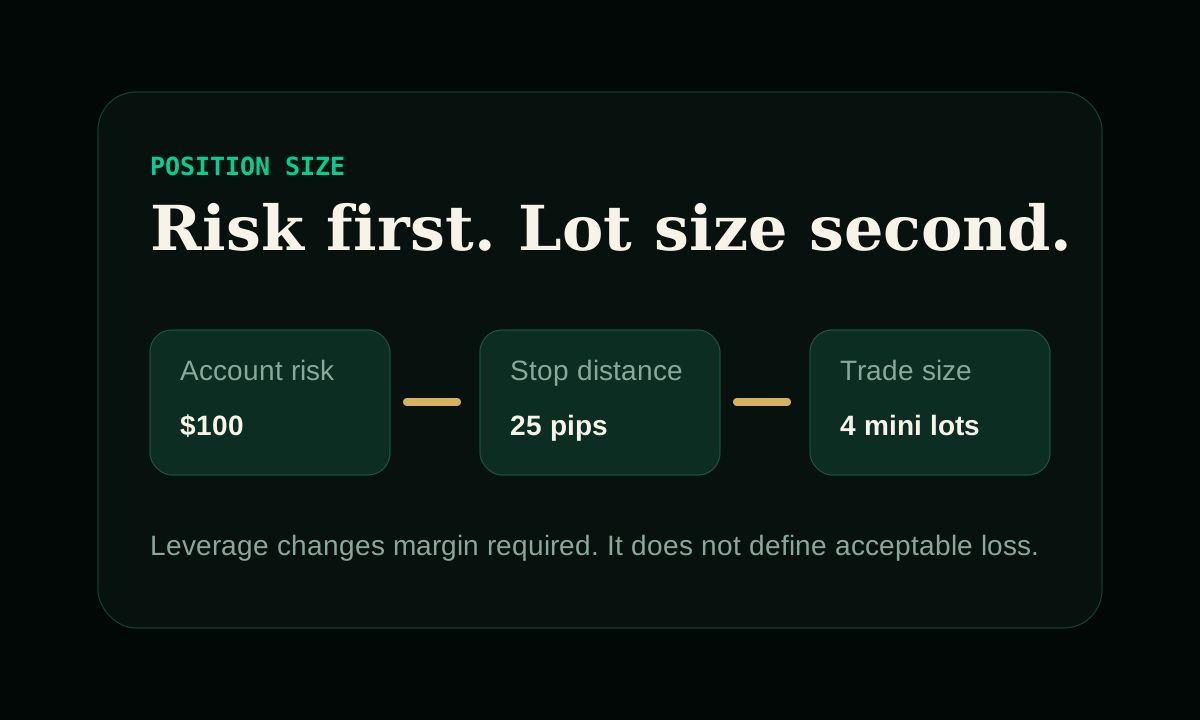
The working idea
Position sizing begins with the amount of money you are prepared to lose if the trade is wrong. That can be a fixed amount or a percentage of current equity.
Once the accepted loss is known, the stop distance and pip value determine the lot size. Leverage should come after that calculation, not before it.
How traders apply it
If a 10,000 USD account risks 1%, the planned loss is 100 USD. If the stop is 25 pips away and each pip is worth about 1 USD per mini lot, the position would be near four mini lots before pair-specific conversion.
The point is not the exact example. The point is the sequence: cash risk first, technical invalidation second, lot size third.
Common mistake
A beginner often asks, How much can I open with this leverage? The better question is, What size keeps the loss acceptable if the stop is hit?
Available margin can make a bad trade possible. It does not make the trade responsible.
Bullion workflow
Before entry, define the stop location and convert it into cash risk. If the number feels uncomfortable, reduce lot size or skip the trade.
After entry, keep a daily loss cap. Once the limit is reached, the next task is review, not recovery trading.
Risk note
This article is educational and does not constitute investment advice. Trading foreign exchange, CFDs, metals, indices, and crypto derivatives involves significant risk and may not be suitable for all investors.